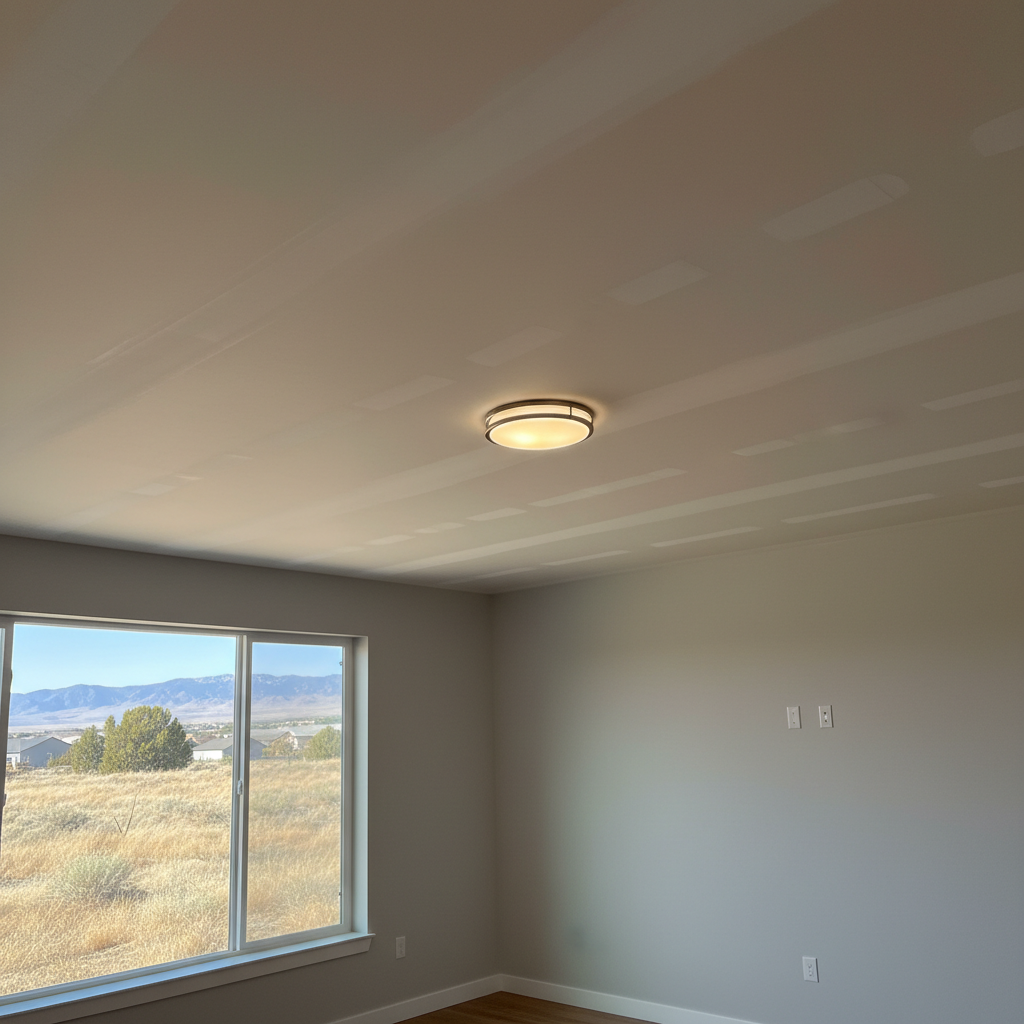
You've got beautiful ceilings, whether they're fresh from a new build or a recent remodel. But let's be honest, ceilings often get forgotten until something goes wrong. Here in South Jordan, with our crazy temperature swings and dry air, taking a little time to maintain your ceiling drywall can save you a whole lot of headache and money down the road. I've seen it countless times.
Extending the Life of Your Ceiling Drywall
The biggest thing you can do to keep your drywall looking good for years is to control the environment inside your home. Our climate here in Utah, especially in places like Daybreak with all the new construction, means homes are constantly settling and dealing with dry air in the winter and hotter temps in the summer. That expansion and contraction can stress your drywall.
- Humidity Control: In the winter, when the air gets super dry, your drywall can actually shrink a tiny bit. This is when you'll often see hairline cracks appear, especially around seams and corners. A humidifier, even a small one, can make a big difference. In the summer, if you're running AC, keep an eye on any excessive moisture, particularly in bathrooms or kitchens.
- Proper Ventilation: Make sure your bathrooms and kitchen fans are actually getting used. That steam from showers and cooking can lead to moisture buildup, and over time, that's a recipe for drywall problems like mildew or even sagging.
- Temperature Stability: Try to avoid extreme temperature fluctuations if you can. If you leave your home for an extended period, don't turn the heat off completely in winter; keep it at a reasonable low setting to prevent the house from getting too cold and then rapidly heating up again.
Regular Maintenance Checks
This isn't rocket science, but it does take a minute of your time. I tell all my clients, including those we've done work for with Western Drywall Company, to do a quick visual check a couple of times a year.
- Look for Discoloration: Any yellowing, brown stains, or dark spots are usually a sign of water. This is the big one. If you see it, you need to find the source of the leak immediately.
- Check for Cracks: Small hairline cracks are often normal, especially in newer homes as they settle. But if they're getting wider, longer, or if you see a spiderweb pattern, that's something to watch.
- Feel for Soft Spots: Gently press on different areas of your ceiling. If it feels soft or spongy, that's another indicator of moisture damage.
- Inspect for Sagging: This is usually pretty obvious. If a section of your ceiling looks like it's bowing downwards, you've got a problem. It could be water, or it could be an issue with how the drywall was originally installed or supported.
Warning Signs That Need Attention
Beyond the regular checks, there are some things that shout,