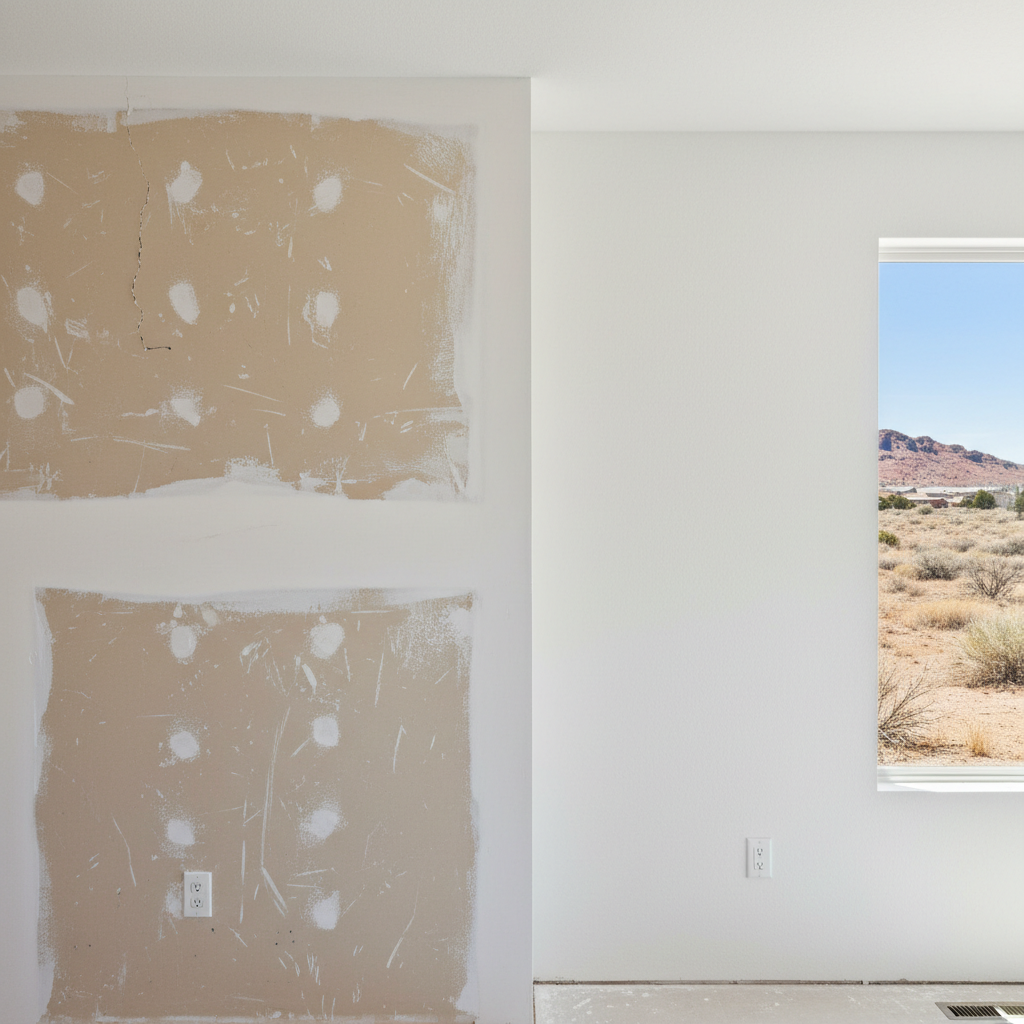
So, you've got some drywall damage, huh? Maybe a door swung open a little too hard, or a plumbing leak left a nasty stain. Whatever the reason, you're looking at a repair, and you've really got two main ways to go about it: patch it up, or cut out a bigger section and replace it entirely. As a contractor who's seen plenty of both here in South Jordan, I can tell you there's definitely a time and a place for each one.
Patching Small Drywall Damage
Let's talk about patching first. This is usually what folks think of for smaller dings, nail pops, or those little holes from hanging pictures. Basically, you're just filling in the damaged area with spackle or joint compound, sanding it smooth, and painting over it. It's quicker, often cheaper, and honestly, a lot of homeowners feel pretty comfortable tackling this themselves.
Cost: For small stuff, it's pretty low. You're looking at a tube of spackle, some sandpaper, maybe a small can of paint. If you hire someone, it's usually a minimum service call, but still less than a full replacement.
Durability: For minor surface damage, it holds up fine. But here's the catch: if the damage goes deeper than just the surface paper, or if it's in an area that gets a lot of bumps (like near a doorway), a simple patch might not last. It can crack or pop out again if the underlying structure isn't solid, you know?
Maintenance: Once it's done right, maintenance is just like the rest of your wall. Keep it clean, touch up paint as needed. No special care, which is nice.
Appearance: This is where patching can get tricky. Getting a perfectly smooth, seamless finish that blends with your existing wall texture (especially if you've got that orange peel or knockdown texture common in many Daybreak homes) takes some real skill. If it's not done perfectly, you'll see the patch, especially in certain lighting conditions.
I'd recommend patching for things like screw holes, small dents, or very shallow cracks that aren't structural. If it's just the paper torn, a patch is probably your best bet.
Replacing Sections of Drywall
Now, for anything more significant, we're usually talking about cutting out the damaged section and installing a brand new piece of drywall. This is the approach for bigger holes, water-damaged areas where the drywall has softened or warped, or sections with extensive cracking from settling or impacts.
Cost: This is going to be more, no doubt about it. You're buying a sheet of drywall (or a half-sheet), more joint compound, tape, and potentially some wood for backing. If you hire Western Drywall Company, it's more labor-intensive because we're cutting, fitting, taping, mudding multiple coats, and sanding. It's a bigger job, so it costs more.
Durability: This is where replacement really shines. When you cut out the bad stuff and put in a fresh piece, properly taped and mudded into the existing wall, you're essentially creating a new, strong section. It's much more robust and way less likely to fail again in the same spot, assuming the underlying issue (like a leak) has been fixed, of course.
Maintenance: Just like a patched wall, once it's done, it's just a wall. No special maintenance required. It'll stand up to normal wear and tear just like the rest of your drywall.
Appearance: A properly replaced and finished section should be invisible. That's the goal! With the right techniques for taping, mudding, and matching texture, it's impossible to tell there was ever a repair. This is especially important for larger areas or prominent walls where you definitely don't want a visible patch staring you down.
I always lean towards replacement for anything that's compromised the integrity of the drywall sheet itself. Water damage is a big one. Even if it looks dry, the gypsum inside can be weakened, and mold can become a real problem. Cutting it out ensures you're getting rid of all the bad stuff.
My Recommendation for South Jordan Homeowners
In our climate, especially with the occasional heavy snowmelt or summer thunderstorms that can sometimes lead to roof leaks, water damage is a common culprit for drywall issues. When water's involved, you almost always want to replace the section. You need to make sure you're not just covering up a problem that's going to get worse later.
For small, surface-level dings that haven't compromised the drywall's core, a careful patch can work. But if you're dealing with anything larger than a golf ball, or if there's any sign of moisture, soft spots, or structural cracks, replacing the section is really the way to go. It's a more permanent, durable fix that will give you a much better-looking result in the long run. You don't want to do a quick patch only to have it fail and have to call us out again in a few months, do you? Do it right the first time, and you won't regret it.